
A work from home savings calculator estimates how much money remote workers save by avoiding commuting, daily lunches, office clothing, and other work-related expenses.
Working remotely often feels convenient, but many people underestimate just how much money they save by staying home instead of commuting every day.
A work from home savings calculator helps reveal the hidden financial difference between office life and remote work by adding up expenses that often go unnoticed.
Whether you are a full-time remote employee, freelancer, hybrid worker, or considering a remote job, understanding your monthly and yearly savings can help you make better financial decisions.
Many people save between $2,000 and $7,000 per year, depending on transport costs, food spending, and work habits.
For most remote workers, the biggest savings come from reduced fuel costs, fewer meals purchased outside, less wardrobe spending, and time recovered from commuting.
Use the Work From Home Savings Calculator
Enter your weekly or monthly expenses below to calculate your remote work savings.
💵Work From Home Savings Calculator
Calculate how much money and time you save by working from home. Factor in transportation, meals, clothing, and other work-related expenses to see your true savings.
Average Work From Home Savings
Most remote workers save:
- $200 to $600 monthly
- $2,400 to $7,200 yearly
Savings depend on:
- commute distance
- meal spending
- parking costs
- clothing needs
| Expense Category | Monthly Savings | Yearly Savings |
|---|---|---|
| Transport | $200 | $2,400 |
| Lunch | $160 | $1,920 |
| Coffee | $60 | $720 |
| Clothing | $50 | $600 |
Why Remote Work Saves More Than Most People Expect
Most workers immediately think about transportation costs, but commuting affects several parts of your monthly budget.
In many cases, the savings go far beyond fuel or bus fare. Daily lunches, work clothes, parking, vehicle wear, childcare adjustments, and even time lost in traffic all contribute to the real cost of going into an office.
Hidden costs of commuting include:
- fuel or public transport fares
- parking fees
- vehicle maintenance
- toll charges
- takeaway coffee
- lunch purchases
- work clothing
- extra childcare arrangements
Someone spending just a small amount daily may be surprised by how quickly that adds up over a month.
For example:
- $8 daily transport
- $10 lunch
- $4 coffee
That equals:
- $22 per day
- $110 per week
- $440 per month
- $5,280 per year
That is why a commuting savings calculator often shows higher savings than people expect.
Cost Categories Explained
To understand how much you save, it helps to break each category down clearly.
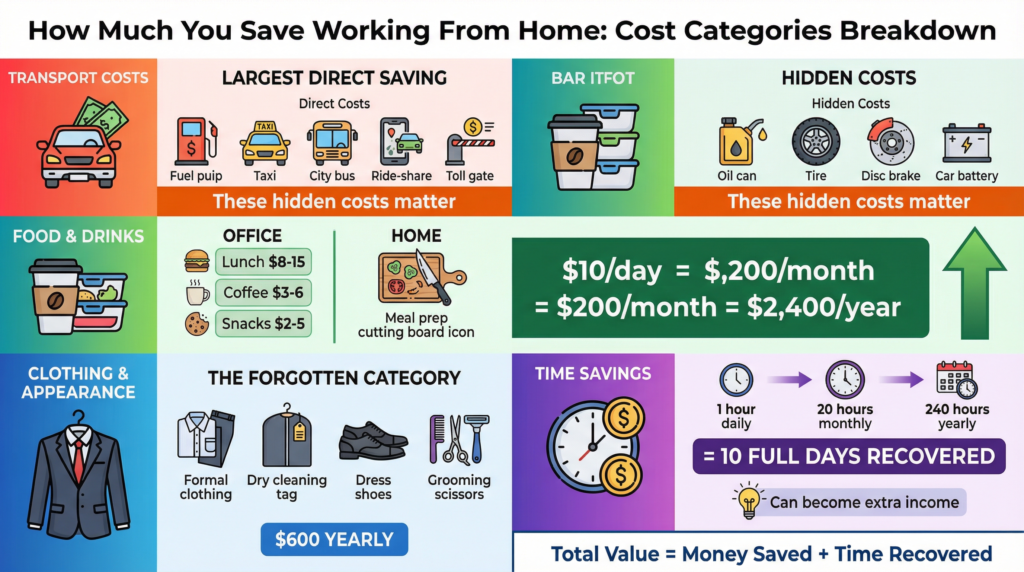
Transport Costs
This usually creates the largest direct saving.
Include:
- fuel
- taxi fares
- bus costs
- ride-share apps
- tolls
For drivers, daily fuel costs often underestimate real expense because maintenance also increases with mileage.
Extra driving means:
- oil changes
- tire wear
- brake replacement
- battery wear
These hidden transport costs matter.
Food and Drinks
Buying lunch during office hours often costs far more than home meals.
Typical office spending:
- lunch: $8–15 daily
- coffee: $3–6 daily
- snacks: $2–5 daily
At home, meal prep can cut this significantly.
Even saving $10 daily equals:
- $200 monthly
- $2,400 yearly
Clothing and Appearance
Many people forget this category completely.
Office work often increases spending on:
- formal clothing
- dry cleaning
- shoes
- grooming
Remote workers often reduce these costs naturally.
A modest monthly reduction of $50 equals:
- $600 yearly
Time Savings
Time is not direct cash, but it has real value.
If commuting takes:
- 1 hour daily
That equals:
- 20 hours monthly
- 240 hours yearly
That is 10 full days recovered every year.
For freelancers or side-income earners, that time can become extra income.
This is why many people asking “how much money do I save working from home” should also think about time as part of the total value.
Real Savings Examples
Here are realistic examples based on common work situations.
Example 1: Urban commuter
- transport: $12 daily
- lunch: $10 daily
- coffee: $4 daily
Monthly savings:
$520
Yearly savings:
$6,240
Example 2: Hybrid worker
Working remotely 3 days weekly:
- transport: $8 daily
- lunch: $9 daily
Monthly savings:
$204
Yearly savings:
$2,448
Example 3: Remote parent
- transport: $10 daily
- lunch: $8 daily
- reduced childcare adjustment: $150 monthly
Monthly savings:
$510
Yearly savings:
$6,120
Does Remote Work Really Save Money?
For most workers, yes. However, savings depend on:
- home electricity usage
- internet upgrades
- air conditioning costs
- office equipment purchases
Even after these costs, many remote workers still save significantly overall.
What Costs Do People Forget Most Often?
The most overlooked savings are:
- parking
- vehicle maintenance
- impulse food purchases
- clothing
- unpaid commuting time
These categories often create the biggest surprise inside a work from home savings calculator.
How to Maximize Remote Work Savings
To improve savings further:
- prepare lunch at home
- use energy-efficient equipment
- reduce unnecessary subscriptions
- invest in durable office gear
This creates long-term savings beyond commuting alone.
Frequently Asked Questions
Is working from home cheaper than working in an office?
In many cases yes, especially when commuting, lunch, and clothing expenses are high.
How much do remote workers save per year?
Many workers save between $2,000 and $7,000 yearly depending on commute and lifestyle.
Should electricity costs be included?
Yes, but they are usually lower than commuting-related expenses.
Does hybrid work still save money?
Yes, even 2–3 remote days weekly can create noticeable savings.